
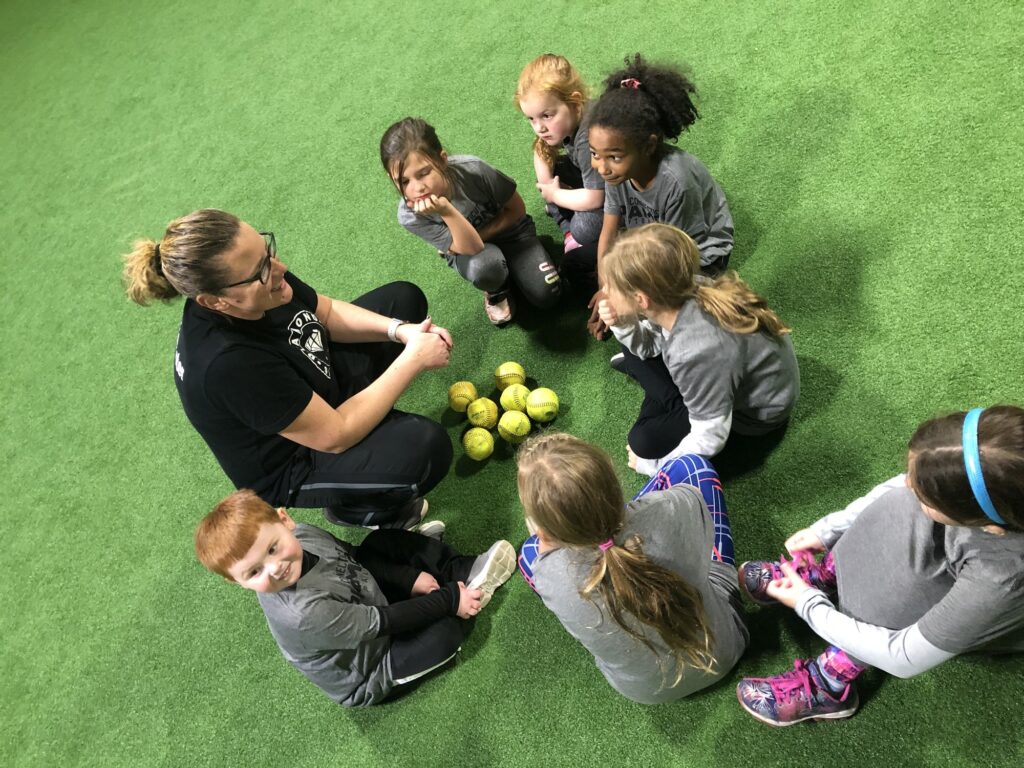
A parent asked us directly at a fall clinic: “If my daughter isn’t the best player on the team, will she actually play?” It’s the question underneath almost every other question a family asks us, and it deserves a straight answer instead of the usual deflection most travel programs give. At Diamond, the answer is yes, she’ll play meaningful innings, because how we build rosters and practices starts from development first, not from who’s already the best player in October.
Most Travel Programs Sort Early, Whether They Say So or Not
By 10U or 11U, a lot of travel rosters have quietly split into “real players” and everyone else, even when nobody says it out loud. Playing time concentrates around the kids who were already furthest along when they joined, and the gap widens every season because the strongest players get the most game reps to get stronger. We built Diamond to work against that pattern on purpose, not around it.
The Research Backs Up What We See at Practice
A national youth sports survey released earlier this year found that 57 percent of current players themselves believe all players should receive playing time, and that having fun and playing with friends outweigh elite aspirations by a wide margin, with only 12 percent of kids citing a college scholarship as their actual motivation. That’s not an argument for participation trophies. It’s a reminder that most families signed up for development and belonging, not for a youth version of pro sports, even if some competitor programs market themselves that way.
Small Rosters Are What Actually Makes This Possible
We keep our teams small on purpose, not because it’s easier to manage, but because a coach who’s actually tracking twelve kids instead of eighteen can get every one of them real reps at practice and real innings in games. A bigger roster might look more impressive on a tournament bracket, but it usually means more kids standing in right field wondering if they’ll see a meaningful at-bat before the season ends.
What This Costs Us, Honestly
We won’t pretend there’s no tradeoff. A roster built around development sometimes loses games a stacked, playing-time-concentrated roster would win, especially early in a season before everyone’s caught up. We’re fine with that trade. A club that’s optimizing for this weekend’s scoreboard and a club that’s optimizing for who your daughter is as a player and teammate in three years are doing two different jobs, and we’re intentionally doing the second one.
What It Looks Like Day to Day
In practice, this means a pitching rotation that isn’t locked to one arm all season, infield reps that rotate instead of freezing into permanent assignments by August, and lineups where a coach can tell you why a kid is batting where she is beyond just “she’s our best hitter.” It also means being honest with a family upfront if a different program, one built around a tighter competitive ceiling, might actually be a better fit for what they’re looking for right now. That’s a harder conversation than just saying yes to everyone, but it’s the honest one.
If this is the kind of program you’re looking for, our apply page walks through what joining actually looks like, and our clinics at Clubhouse 220 are a no-commitment way to see this approach in person before you decide anything.
Diamond Softball Club — Development over drama. New England travel ball for players who actually want to get better.