
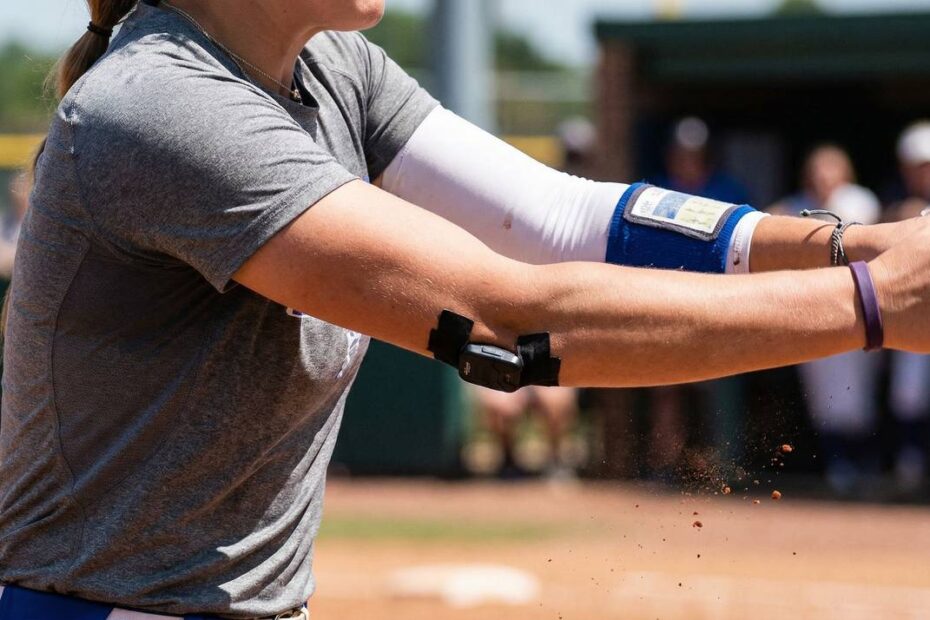
The windmill pitch is not safe.
Not “dangerous like a car crash” — but not the benign, natural motion that coaches have been selling for decades either. The research on this has been piling up for years while the travel softball world largely ignores it.
The Myth That’s Hurting Your Pitcher
For as long as I can remember, parents have been told: “Don’t worry about the windmill. It’s a natural motion.” That’s wrong. Research published in Sports Medicine — Open found distraction stresses of 70–98% of body weight across the shoulder and elbow during the windmill delivery.
And here’s the part that should concern every parent sending their 12-year-old to a showcase: injury rates in youth softball pitchers are now comparable to or exceeding their baseball counterparts. That’s a peer-reviewed finding from orthopedic research — not the travel ball community, where this information apparently hasn’t landed yet.
The Tournament Culture Is Making It Worse
Here’s what a typical New England travel ball weekend looks like for a pitcher: Friday evening, 80 pitches. Saturday morning, 60 pitches. Saturday afternoon, another 55. Sunday elimination game, 70 more. That’s 265 pitches in roughly 48 hours. Zero structured rest protocol.
A University of Florida Health study found that about a quarter of parents and caregivers didn’t even know if anyone was tracking pitch counts at all. Softball has almost nothing comparable to Little League’s mandatory pitch count rules at the travel level.
What Arm Load Actually Means
Arm load is a function of volume (how many pitches total), intensity (velocity and effort level), recovery time (actual days off, not hours between games), and mechanics under fatigue. Velocity drop-off over the course of a session is one of the clearest early indicators of fatigue-driven mechanical breakdown.
What Good Arm Care Looks Like
• Pitch logs, every session — not estimated, actual.
• Mandatory rest periods — 24 hours minimum after moderate volume, 48+ after high-volume days.
• Long toss as part of warm-up, not an afterthought.
• Coaches who know what fatigue looks like in mechanics.
• A culture where “she’s sore” gets taken seriously.
College coaches recruit healthy athletes — ones they believe can stay healthy for four years of game reps, practice, fall ball, and travel. Burning through her arm at 13 to win a pool play game in October is not a development strategy. It’s the opposite.
The windmill pitch is a beautiful, mechanically complex movement. It’s also physically demanding in ways the softball world has been slow to acknowledge. Your pitcher deserves coaches who know the difference — and a program built to keep her throwing for the long haul.
Alison Rossi is the founder of CT Diamond Club and a Division I softball alum with 10+ years coaching travel ball in New England.