
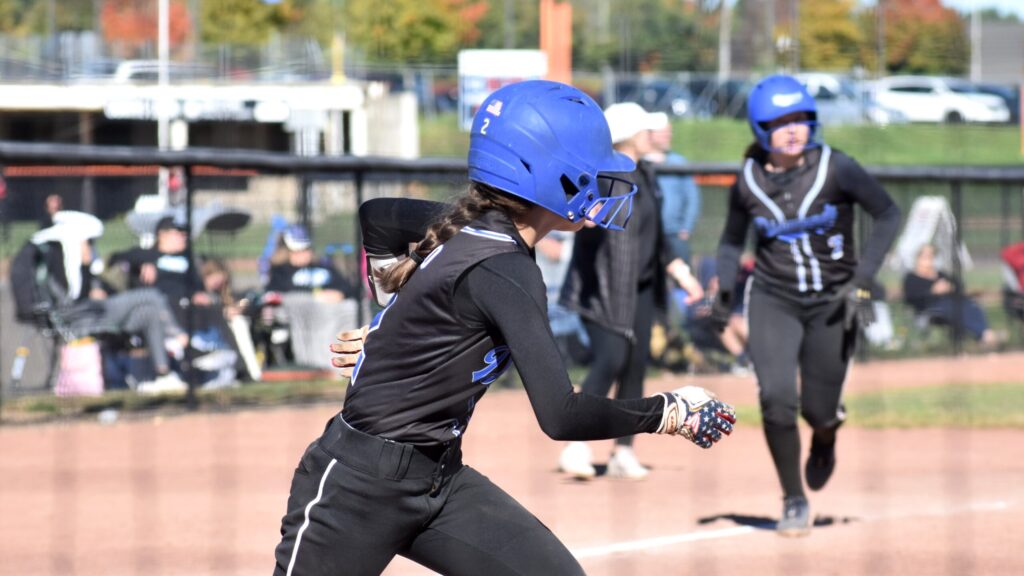
I watched a player at a tournament in Kingston, MA last spring tear the cover off the ball in BP. Loud. Line drives everywhere. Then in the game? She couldn’t get her bat on a hanging curve to save her life. Struck out twice. Grounded into a double play. Walked back to the dugout looking like she’d seen a ghost.
Her mechanics hadn’t changed. Her swing path was identical. What changed was what was happening between her ears — and that’s the piece most New England travel ball programs simply don’t touch.
The Equipment Race Is Real. The Mental Race Is Wide Open.
Walk any tournament parking lot in Connecticut, Rhode Island, or New Hampshire and count the premium bats, the game-ready helmets, the personalized catcher’s gear. Parents in New England have figured out equipment. They’ve figured out showcases. They’re increasingly figuring out data.
But here’s what I see consistently: players with $400 bats and $2,000 showcase fees who fall apart the moment the game is on the line. Who can’t move past a bad call. Who play scared in big games and then wonder why they’re not getting recruited.
According to the Aspen Institute’s State of Play report, fewer than 15% of youth sports programs in the U.S. incorporate any formal mental performance or sports psychology content into their regular training. In New England — where the tournament season is short, expensive, and hyper-competitive — that number feels optimistic.
What Mental Performance Training Actually Is
Mental performance training in softball is concrete, trainable, and measurable. It includes:
- Breathwork and arousal control: how to regulate your nervous system between innings, after an error, before a big at-bat.
- Visualization and pre-pitch routines: elite hitters rehearse the at-bat mentally before the pitcher releases the ball.
- Error recovery protocols: the difference between a player who spirals and one who moves on immediately is trained, not accidental.
- Competitive self-talk: what you say to yourself during an at-bat shapes your performance — and it’s programmable.
What Age Is Right?
Parents often ask: “Is my daughter too young for this?” My answer: your 11-year-old is already doing mental performance — badly. She’s already telling herself she’s not good enough after a strikeout. The question isn’t whether to train the mental game. It’s whether to train it deliberately or let it get trained by accident.
The Parent’s Role
Your job is not to motivate your daughter before games. Your job is to notice her process, not her outcome. “You had a great at-bat — you stayed inside the ball” is a mental performance comment. The moment you tie a compliment to a result, you reinforce outcome dependency — the exact thing we’re trying to break.
We build mental performance into our practice structure at Diamond Club. Not as a once-a-season seminar. We teach breathwork. We run visualization exercises. We give players language for what they’re feeling and protocols for how to handle it.
The mental game isn’t the edge. It’s the table stakes. And New England travel ball is behind. We’re here to change that — one player at a time.